Search This Blog

Showing posts with label Renegade. Show all posts

Tuesday, March 13, 2012

ME2 | Humans Playing God, Science, and Identity

As I play, I'm finding myself increasingly justifying the actions of a Renegade character. That, or maybe I'm simply understanding it more now that I've actually taken the time to consider it. The experience certainly proves that I'm no exception to the overall ignorance of humanity as a whole. Perhaps Renegade FemShep isn't as bad as she seems. The poor image of her is tainted by her tendency to swear and make brash decisions when in reality, obscenities are just words and her choices are very logical with a focus on how it will effect everyone in the future. The Renegade character is always looking forward in time and with a mindset that covers the big picture rather than the here-and-now that the Paragon seems to see. 


I just recently discovered how Mass Effect 3 ends, and I must say that I'm disappointed. I'm entering the realm of spoilers here, so avert your gaze until you see bold lettering if you wish to play it with a fresh eye. 
The adventures and missions embarked upon throughout the first two games of the ME trilogy foreshadow an epic, ridiculously awesome and difficult showdown with a huge, astronomically powerful alien race that plans to annihilate the galaxy. While the revelations about the Reapers and what their true intentions are seem interesting to me - I'm basing all of my information about ME3 by quick glances of reviews online - it's the ending that seems to have everyone in an uproar, including myself. It's a bit extreme to claim that everything you do up to the final moments is for nothing. Billions of beings' lives are saved by Shepard's efforts, and he is given somewhat of a godlike status for his actions. But a big part of what made this RPG so satisfying is that you, the player, have a ton of control over how the game plays out. Bioware hyped up this game and said that decisions had an even greater impact on the overall outcome of the game than ever before. Yet the ending resolution to the game ultimately ends the same way, no matter what choices you make: 1) Every mass relay is destroyed, leaving several and almost all of the galaxy's life forms stranded on foreign planets with zero contact to other species and a high probability of dying there. 2) Shepard dies. There's no avoiding it at all. Supposedly, if you have a high enough amount of XP you can see Shepard twitch right before the credits, clinging to life but ultimately losing the battle. 3) Your crew gets spaced, too. All of those characters you learned to love or hate, but appreciate and respect nonetheless, die in vain. Now, I have to play devil's advocate with this, as someone who is viewing this gaming series with a critical eye. Not everything in life has a happy ending. With something as huge, dramatic, and violent as this is, it's reasonable that there will be a lot of death and some seriously depressing results. But what many gamers who became invested in this series had hoped to see was the impossible: Shepard lives, has a happy ending with his or her LI (love interest), has drinks with the crew, and pans back to a view of the galaxy, which has taken a hit but is working on rebuilding itself. It's all too possible and realistic that the galaxy would be destroyed, almost everyone dies, and the Reapers essentially accomplish what they were aiming for. It's a bit surprising to me that Bioware chose to end the series this way, and, as I said before, disappointing. There's already a movement to get Bioware to create a DLC to "fix" the ending and allow gamers the choice to save more lives, prevent the mass relays from being destroyed, and not die. I, for one, am all for it and hope their efforts succeed. Technical images are most satisfactory when we have control over them, as I have likely shown through my gaming journey here. When the ending was taken out of our control and destruction and death became the only solution, we threw our controllers into the air with disgust. I'm not nearly as excited to play ME3 now. Had I heard that there was a possibility to save the galaxy and have that "only in the technical realm" happy ending, I would still be stoked to play, even with the spoilers. Here's to hoping.


Okay. Now to the stuff I actually did in ME2. 


Jack Loyalty


There's an undeniable resemblance to Grunt with Jack. She, too, was tested by her own race to create the perfect biotic soldier. Many people died in pursuit of exploiting her abilities. The difference here is that the truth was hidden from her. There are so many things she never knew as the process continued. She was experimented on - tortured, really, because she felt a lot of pain on both a physical and psychological level - as a child. It was only through the Shadow Broker DLC that I learned a teeny bit more about Cerberus' motives with her. (It also made me hate Cerberus a bit more than I already do. They're dangerous extremists.) She was exposed to Element Zero, as other biotics had been, but she had been given a dangerous amount of it and, amazingly, survived. Cerberus lied to Jack's parents, who know nothing of Jack's whereabouts, and kidnapped her to be used as a labrat. She was dumped in with kids that had been purchased as slaves or stolen by pirates. The loyalty mission itself is to destroy the facility that kept her imprisoned. Literally. She wants to blow it up, and we do by the end of the mission. (I'm getting a slight vibe from The Count of Monte Cristo here. Deception, isolation, truth, and revenge - in that order - puts Edmond Dantes and Jacqueline Nought in a similar circumstance. I like that I found out her real name, too. I knew it wasn't simply Jack.) Her tough and sexual exterior are a response to her life in what seemed to her as a prison. This level also showed some of Jack's humanity - her soft side, if you will. She isn't just some obscene wild woman or rebel without a cause. She very much has cause. Cerberus stripped her of a normal life and made her what she is today. (Again, Monte Cristo much?) Granted, the choices she made after she escaped were her own and it can be argued of whether or not she could still make them, but that would be a purely hypothetical argument about a technical image, so you wouldn't really get anywhere with that. She said something along the lines of, "I believe that horrible things or actions must have a good reason". Under her hard outer shell, she has a reasoning and moral center that tries to find the good in the bad. For the most part, she's had great difficulty with this, which has led her to be frustrated and full of despair, as well as distrusting of everyone. 
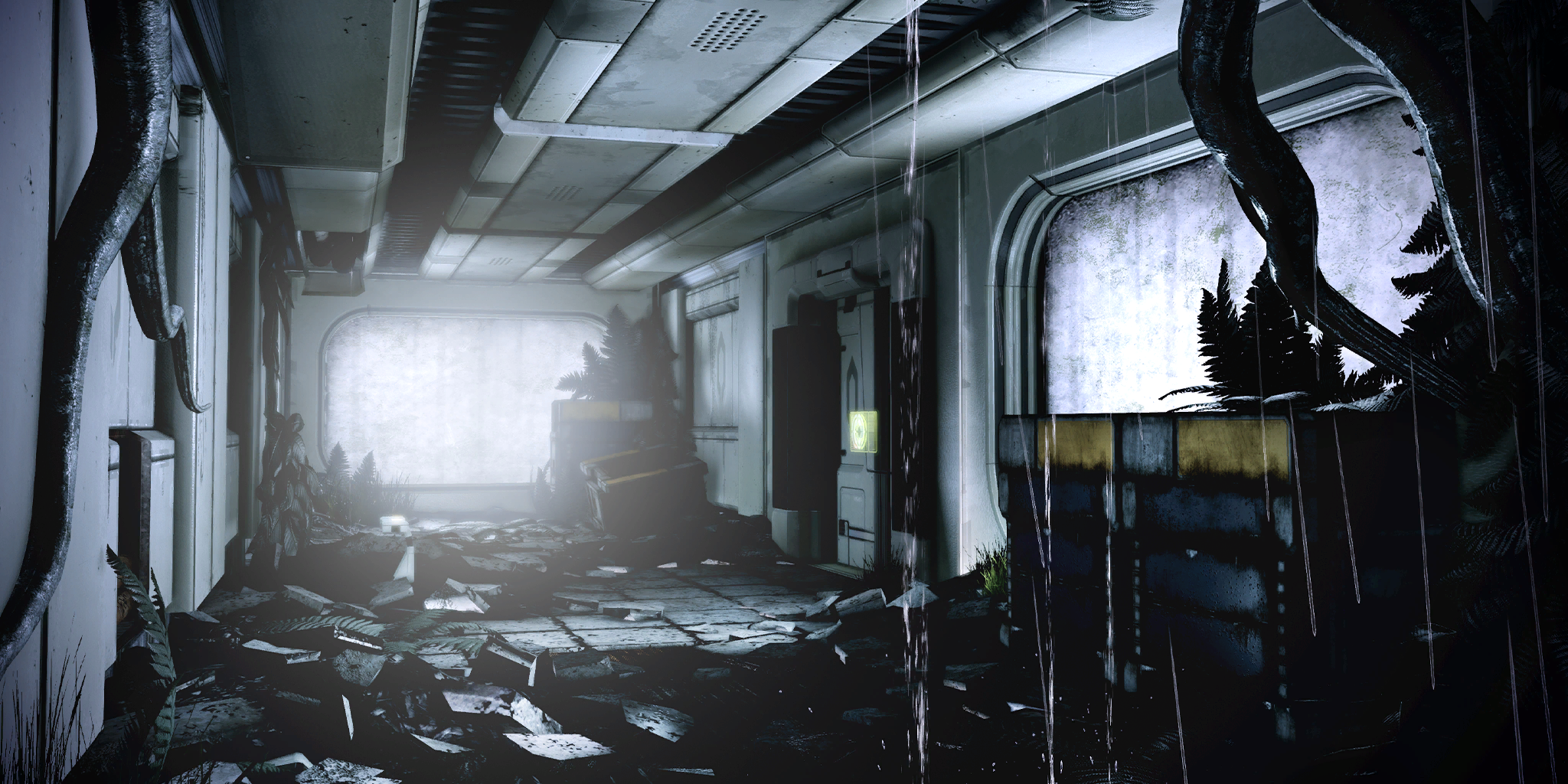

Pragia (testing facility where Jack was held)
This makes me ask the question: What limits corporations with revolutionary scientific study? How far should they be allowed to go with their research? This again reminds me of Makers by Doctorow, and of Gamer starring Gerard Butler. It's a game of money and power. Life is a game of money and power - to some, anyway. Where is the end to all of this? Does the end of the game of power (a la A Game of Thrones) mean an end to all of civilization as we know it? Perhaps the Reapers were on to something. (See ME3 spoilers for details on what I mean by that.)


Mordin Loyalty


As much of the game has hinted at, Mordin's loyalty mission bears a connection to his previous work on the Genophage as a member of the STG. It weighs on his conscience greatly as he struggles with whether or not it was the right decision to make - whether he should have made the decision in the first place. (How interesting. To a certain degree, he represents human's struggle with the concept of power and the consequences that can come with playing god.) It also showed Mordin's scientific philosophies. He strongly values all life and would rather preserve it than kill an innocent being for research. (My hero.) He would never perform experiments on live test subjects, and limited subjects by their intelligence level. If they're "capable of calculus", he refused to work on them. Human scientists of today likely perform their studies similarly. Rats and mice are common test subjects. They're living creatures, as many pro-life animal supports will adamantly point out, but they lack the higher intellectual capabilities that humans are capable of (amongst other creatures that also have higher mental capacities). ME2 emphasizes how fascinating the human race is, and this level plays on that factor. Humans are shown to have been studied upon, valued for their "diversity". The game makers made it so that all other species are strikingly similar to one another whereas humans and their (or should I say, our) genetics have such a wide range. Mordin knows that "all life is precious" and is vehemently opposed to his former allies' efforts to restore the cure to the Genophage - not because curing the Genophage is necessarily bad, but because his fellow salarian's methods at achieving it were less than reputable. 


Tuchanka (a giant dump that Krogans live on)
Speaking of life forms, I made a note of how intelligence can be a burden on living beings, but such a burden has no presence in the form of technology. This computer that I'm typing on doesn't have morals or feelings of its own. (Or does it?...) It's a logical output of words, images, and symbols that were input by beings with morals and feelings. If I used scraps of technology, just like Perry and Lester from Makers, and made a robot, and then I commanded it to kill my lab partner, the burden of guilt and remorse will be put on me. The computer will be the logical factor that reminds me that his circuitry wasn't completed yet and without said lab partner, I can't finish it. Technology lacks the "human" trait of compassion and general feeling. Of course, it also lacks such things as flesh and blood, too.


And this brings me to the Reapers themselves, who are a combination of organic and synthetic material. ME2 hints at this in the final battle of the game. Reapers are made of organic material - humans, for example - and technology helps to support their size and the fact that they're also spaceships. It's honestly pretty difficult to wrap my head around. Consider it this way. Think about yourself and your body. You are an organic, living being, filled with anatomical parts that fulfill bodily functions. Now imagine that you're two or three as big as you are now, thanks to a technological experiment that hooked you up with wires and electronic parts. You have all the same internal organs and stuff, but there's now additional room to, say, store stuff. Maybe your cat can sleep in your chest cavity. The Reapers are like that. They're giant, semi-living creatures that have been heavily supported by a futuristic form of technology to make them live the dual identity of a creature and a ship. ME3 enforces this further with the final choices. (Sorry, guys. I'm a spoilery person, when it comes to games and TV shows. Can't help it.) And, as a sci-fi fan, I would be inept if I didn't mention Moya, the ship from Farscape that is, as Crichton mentions in the intro, "a living ship". 


This diagram points out the fact that Moya is both a spaceship with a docking bay and a living creatures with a brain.


Grunt Loyalty


I didn't take too much down for Grunt's mission, as it was also on Tuchanka and I just wanted to get it over with. It's mainly about seeking a personal and cultural identity. He feels torn as a Krogan who was created in a test tube - one who cost many potentially strong (both in physique and willpower) Krogan their lives - and whether or not he deserves to be part of the Krogan society on Tuchanka. As a true Krogan, which he technically is, he needs to be a part of their world. (Cue the accidental song lyrics reference to The Little Mermaid.) That's something the game makers took an interesting take on. Krogan have a biological need to satisfy their place in society, similar to what humans would call "puberty". (Jack points this out in that oh-so-sarcastic manner she embodies.) This mission centers on something all people must experience at some point in their lives, usually during the time between their mid-teens and mid-twenties. We must all have an understanding of who we are as individuals and where we stand in society. Self identity and cultural identity. One more point that I made a note of is emphasis on "krant", or comrades. As the Beatles famously sang, "I get by with a little help from my friends". At the risk of sounding corny with this cliche, the power of friendship is something that shouldn't be underestimated. Humans innately rely on a physical, intellectual, and emotional connection with others. In the Mass Effect universe, that same policy applies to all species with the "higher intellectual capacity" that Mordin elucidates.

A thresher maw, as previously shown in ME1. This thing is massive in size, and also a big pain in the butt. When I first played the game, it scared the crap outta me. 
Gaming Segment (3.5 Hours)


One note I made reminded me of the television shows Bones and Sherlock. The titular characters, Temperance Brennan and Sherlock Holmes, are extremely brilliant but lack proper social skills. They're very honest and have a logical, scientific mind that deviates from traditional human compassion. Renegade FemShep strikes me as someone who fits into this group, but with a little more firepower involved. She's certainly not stupid, but also definitely won't go out of her way to shake hands with a fan or get to know a fellow soldier. She's driven by the job. Get from Point A to Point B in the most efficient way possible. End of story. 


While there's nothing that can be done now, had I been able to do so, I would have liked to play a game I had never played before. It would have been annoying to have to stop and take notes on something I'm completely unfamiliar with, but it would have seemed less forced. On the flip side, there are advantages to knowing what's going to happen, beyond the obvious factor of no surprises. I can afford to gloss over things I know are insignificant and focus on immersing myself intellectually into previously unexplored areas. Pros and cons in everything, eh?


Only a few more posts to go! The end is in sight! I will say, though, that this experience will likely remain with me in the sense that I'll continue to play video games with a critical judgment. Similar to my film class and the theorist Barthes, I'll divide my mentality into half-immersive gamer that totally digs all the visual stuff, and half-intellectual gamer that sees beyond the image to why it's there, what it represents, etc. And that's fine with me. I might have better gaming experiences this way.


~Mel

Sunday, February 26, 2012

ME2 | Just Another Routine Mission


Please note that this game is rated M for Mature. The adult content includes: blood, drug references, sexual content, strong language, and violence. For more information on game ratings, visit http://www.esrb.org/.
Also, I would suggest to click the title of each post (in this case, ME2 | Just Another Routine Mission) so that you only view this post and there's less on your screen. I'm a bit meticulous and tend to write long posts, so it would be easier on you to have one post open at a time.

My first official blog post will be about the main plot of the game (covering the events from Mass Effect 1), the beginning of ME2, and the creation of this playthrough’s Commander Shepard. What better way to have a quick summary of the first game than to show the Genesis DLC? (DLC means “downloadable content”, for those who are unaware.) I purchased this on my Xbox a while back. Its purpose is that gamers who hadn’t played the first ME game could make the critical choices that will affect the story in ME2, while simultaneously summarizing what took place. This video features FemShep (a term fans created for the female Commander Shepard), since I will be playing as a female.


Plot

That video covers the basics of ME1, critical to understanding ME2. With the exclusion of the relationship option – since there is no good or bad choice to make – my character will take all of the evil options, which will be highlighted in a red color.

Commander Shepard is on a “quest to stop the rogue Spectre named Saren Arterius from leading an army of Geth (electronic-based creatures) to conquer the galaxy. Shepard learns of a far greater threat in the form of the Reapers. Saren has been mentally enslaved by the Reaper ‘Soverign’, a vanguard sent into Citadel Space to initiate the purge of all advanced sentient life in the galaxy, a cycle repeated by the Reapers every 50,000 years.” (Gotta love Wikipedia, eh?) The end of the first game shows Shepard and his team defeating both Saren and Sovereign, at a great cost. I would recommend looking into the first game in greater detail, if you aren’t already familiar with it.

The beginning of ME2 has to outdo all that. And it totally does. In the first ten minutes, Shepard dies. The makers killed the lead character that you control. I can’t imagine how that must have felt for first-time gamers who had no idea what would happen. (I started the game knowing how it began, so it wasn’t a surprise for me.) But it’s okay, because the future has such fantastic technologically-advanced science that it can bring Shepard back to life. It may cost a lot of credits (this game’s term for electronic and intergalactic currency), but the fact remains that it’s possible, let alone expensive. The main plot of the Mass Effect series is about the progression of Shepard’s mission to protect the galaxy from the Reapers. ME2 is about Shepard teaming up with Cerberus – a human paramilitary organization – to gather some of the best of the best in the galaxy to fight the Collectors, a mysterious species that has a connection to the Reapers. From their interactions with the Collectors, they hope to learn more about the Reapers and find a way to prevent the massive and villainous aliens from leaving dark space to destroy all life. Again.

As a sidenote, I can’t help but compare the Reapers to giant, armed squid, which is a ridiculous image. And then there’s the obvious comparison to the Drej in Titan A.E. that I can’t put out of my head.


If you would like to physically see what’s happening, go to the video bar at the right side of the screen titled ME2 Walkthrough. I’ve added a YouTube channel that shows a walkthrough of a FemShep Renegade character. Yes, there is a guy who comments on his walkthrough, which can be highly annoying to some, but you can always mute it and read the subtitles. While his character is not the same as mine, the choices made are almost entirely the same as what I’ve done/will do. (Be sure to start with the Part 1 clip to spare yourself the confusion.)

Choices Made in Genesis
·         Relationship: Kaiden. What the heck, right? The way I see it, a Renegade FemShep would mess around with a fellow human crew member and not take it seriously. This game seems to follow a strong sense of selfish bias for one’s own species, so that further justifies her choosing. It…ah…releases tension, which is important to keep a leader focused. Right? 
·         Rachni Queen: Killed. Is terminating her really so bad, when looking at the greater good? Murder is murder, but sacrificing one life to potentially save millions doesn’t give it such a lowly perspective. Eliminating one less threat to galactic destruction is a mark on the checklist of to-do’s.
·         Wrex: Killed. Perhaps it’s a rash decision to kill a squad member – especially since I have the previous bias of a Paragon character, who liked him and kept him alive – but he was interfering with a major game-changer in defeating Saren and the Reapers. The Virmire facility had to be destroyed. They were more robotic monsters than Krogan, and their deaths would mean saving trillions of lives.
·         Who Stays Behind: Ashley. Both are good soldiers and loyal to the cause, so the decision isn’t based on competence. I chose because I think Ash is similar to Shepard in that they’re both intense soldiers who do what’s necessary to get the job done. (Ash is probably a bit less cold-hearted, though.) I believe that Shepard would have made the choice for her leader, were she in the same position. FemShep acknowledges – even as a Renegade, I might add – that Ash was a good friend and the decision wasn’t easy to make. Plus, I usually save Ash and changing things up is meant to mess with my mojo. It did. I wasn’t used to seeing or reading about Kaiden being alive.
·         Council: Sacrificed. Just as it was with the Rachni and Wrex, this decision was made to sacrifice a few and save many, in regards to a ratio. Helping the Council would mean less ships attacking Sovereign, threatening not just billions or trillions of lives – many of which are innocent – but imposing the destruction of intergalactic stability. An easy choice, when ignoring the idea that they’re living beings and not statistics. As FemShep notes: “The Council could be replaced.” They represent political ideologies, not people, and thus would continue.
·         New Council Leader: Udina. While Anderson is considered a trusted friend, Udina represents what Shepard believes in and fights for: getting things done. If it takes a hard hand and ruthless ambition, so be it. While he’s not as trustworthy as a person, he knows how to lead and deal with political bombshells. Another FemShep note: Udina is “someone willing to be a bad guy…for the sake of the greater good”.

Commander Shepard Specs
·         Gender: Female. This seems strange to everyone I’ve mentioned it to, but I usually choose to play as a male character in video games. I don’t really know why. Perhaps I’m subconsciously attuned to the stereotype, or maybe I just like making the guy super attractive so I can look at him all the time. Anyway, I picked a female for this runthrough because it’s something I don’t normally do, thus a slight increase in discomfort.
·         Difficulty: Hardcore. The Mass Effect series has five levels of difficulty – Easy, Normal, Veteran, Hardcore, and Insanity. I’ve started and abandoned many of my games with ME, and this will be the second completion of the Hardcore setting. I usually play at the Veteran level. The main difference is that it makes the bosses more difficult to beat due to better protection.
·         Name: Luc Dolores. Weird, I know, but I wanted something original. Luc is pronounced “Loose” and is short for “Lucifer”. Ha. Dolores is a reference to my most-hated character from the Harry Potter series, Professor Umbridge. Two villainous names. I found it quaint. The name you choose doesn't matter with the game at all, since he/she will always be referred to as Commander Shepard. I will likely refer to her as FemShep.
·         Class: Soldier. I’m going for a quintessentially human FemShep (since Cerberus is supposed to be an evil corporation with a pro-human bias), and the Soldier class is the least influenced by the future. The biotics and tech classes clearly show scientific and technological advancement. In addition to that, I think it gives a huge advantage to weaponry because I can use all five types of guns and reap the benefits of their upgrades.
·         Background: Earthborn. Again, I’m sticking to human roots, and she’s better than the “petty crime and underworld gangs”, as the description states. Good or evil, Shepard cares about saving people and doing good for the galaxy. The Renegade route simply goes by a more logical and less compassionate manner.
·         Psychological Profile: Ruthless. This is a defining feature of a Renegade Shepard. “Throughout your military career, you have held fast to one basic rule: get the job done. You’ve been called cold, calculating, and brutal. Your reputation for ruthless efficiency makes your fellow soldiers wary of you. But when failure is not an option, the military always goes to you first. You sent 3/4ths of your unit to its death and murdered surrendering batarians on Torfan.” Basically, Renegade Shepard is a heroic and efficient pain in the ass.

Gaming Segment (3.5 hours)

I already have a different feeling than I normally do, knowing that I'm playing as a female Renegade. Furthermore, I did something unique - I customized FemShep's appearance to be ugly. Now, what I view as attractive is purely based on my opinions and perspective, but what I did was push the eyes, mouth, chin, and other facial features to extreme levels by making them too big, pushing them too close together, etc. The purpose was to make me feel uncomfortable, since I will have to look at the product of my alterations for several hours. Initially, it's working, but not because I find her so hideously ugly - I feel guilty for having put that upon her. She's not even real - nothing more than numbers put into a machine - yet I feel an emotional response to the visual I created.

When Miranda kills Wilson and I make the Renegade dialogue option, the game seems to show that trusting no one but yourself is a good thing. I can understand that. If there's no one to trust, there's no one to hurt you, and in a world rampant with betrayal and deception, that can be a strong safeguard. In the interview aboard the transport vehicle to the Cerberus facility, Miranda and Jacob ask FemShep questions about her past - the event in her background on Torfan and her decision on Virmire between Ashley or Kaiden. Her responses involve "[doing] what was necessary", but acknowledging that she sent "good soldiers" to their deaths. She can't let morals affect important decisions. Later, when FemShep boards the Normandy SR2, EDI appears to agree with FemShep's lack of desire to trust others, concluding that it is "irrational". AI's are seen as some form of perfection, or at least technical upgrades to the heavily-flawed human race. (Miranda's background is another example of this.) It reminds me of an episode of Fringe that aired on February 17th of this year called "A Better Human Being". A scientist created various beings that were made to be perfect versions of himself combined with other genetic material. We strive so ardently for perfection, but it results in two ways: either we screw up because we try to hard, or it was a futile attempt in the first place since perfection is an ideal that doesn't actually exist. (How pessimistic.)

I can already tell that Renegade dialogue is more direct and "cut to the chase" than Paragon dialogue, disregarding emotional reactions. I can also tell that this game sets up Miranda and Jacob as a physical representation of the differences between Renegade and Paragon, respectively.

Something I suspect will prove to be very consistent is the industrial, boxy feel to each environment. The Cerberus facility and Freedom's Progress colony certainly attest to that. Neither are places I would like to call home, though I'm accustomed to grass and trees and thus have a bias. They both seem clean and shiny, certainly, but that's not necessarily a great thing. Part of my dislike for it may come from an innate modern human feature - fearing technology. Moreover, the mechs and geth are a futuristic technology capable of automatic choices to kill and can be programmed to do what humans or sentient beings can't. They're a common staple of most civilizations to protect them from danger, yet they can easily become the dangerous creatures themselves. (Perhaps this is a statement about our current technology?) 

Why do they put so much emphasis on the Normandy? Don't get me wrong - it's a great ship. I've tried to imagine what it would be like to board it. The futuristic tech alone is reason enough to be fascinated, but it's a sleek, powerful, and more than sufficient ship. I just have to laugh when the big, melodic music booms as the Normandy SR2 is introduced - music that's solely used for the big reveal of the ship. 

Everything Else

At this point, I’m already over halfway through the game and have taken a variety of notes. I got so caught up in it that I neglected to actually get my thoughts to the blog. It’s a testament to humanity’s obsession with technology. For my next post, I’ll continue to discuss the plot and my character’s decisions, as well as the implications of what each subplot and what themes and undertones are present in each mission. In at least one of my posts, I’d love to discuss the depth of this game and how much effort and technology was put into it. I’m still awed by the sheer vastness of it and the vast attention to detail. I'd also like to pick apart Cerberus and the Systems Alliance (the representative government for the entire human race). But that's for another post. 


~Mel